






Four Core Elements of an Emergency Preparedness Program

If a storm caused a power outage during a procedure, would every staff member know exactly what to do? Could your center demonstrate that its response protected patients and met applicable requirements? A well-designed emergency preparedness program gives your team the structure, training, and confidence to respond effectively when it matters most.
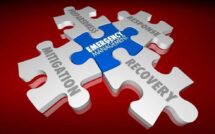
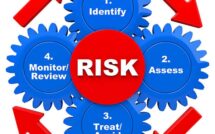
Effective planning and implementation depend on four connected elements. When each element is addressed and documented, the program provides a reliable framework for protecting patients, guiding staff, and demonstrating readiness.
Preparing a Structured Program
Every Medicare-certified ambulatory surgery center must maintain a formal emergency preparedness program as directed in the CMS regulations. If your state also has requirements, state inspectors will also evaluate compliance. Compliance surveyors will review the program, the thoroughness, the education of staff, the drills with critiques and the action plans.
Hurricanes, floods, wildfires, and disease outbreaks have repeatedly shown how quickly a facility’s ability to protect patients and keep operating can break down. A vague plan is a deficient plan. Protecting patients, staff, and the facility by maintaining compliance with regulations and standards Is imperative. Emergency preparedness citations lead to a plan of correction at minimum, and serious or repeated deficiencies can put your certification and accreditation at risk. Those are costly outcomes for a problem that is entirely preventable.
Four Core Elements Every ASC Must Have
CMS organizes every compliance program around the same four elements. Each one depends on the others, so a strong communication plan built on a weak risk assessment still leaves your center exposed.
1. Risk Assessment and Emergency Planning
Everything starts here. CMS requires an all-hazards risk assessment, which means evaluating the full range of emergencies your specific facility could face: natural disasters, utility failures, cyberattacks, active threats, and infectious disease events. The assessment must reflect your actual location, building, patient population, and case mix. A center in Florida faces a different risk profile than a center in the Midwest, and the plan should read that way. Revisit the assessment whenever you renovate, change the scope of services, or experience an emergency event you failed to consider.
This element overlaps heavily with your physical plant. Generator capacity, fire protection, and egress routes all factor into how your center responds, which is why emergency planning should be coordinated with your life safety compliance program rather than developed in isolation.
The assessment should also inform decisions about backup power, supplies, and facility layout.
2. Policies and Procedures
The program identifies what could happen. Your policies and procedures define what staff will do about it. These must address how your center will evacuate, shelter in place, and protect patient information, along with the specific scenarios your risk assessment identifies.
The policies and procedures must also be specific enough for staff to follow under pressure. A policy that says “evacuate patients safely” without naming roles and decision-makers does not meet the standard. Include a clear line of succession so decisions do not stall when the administrator or medical director cannot be reached.
3. Communication Plan
In an emergency, communication usually breaks down first. Your communication plan must include current contact information for the people and agencies your center would need to reach, including staff, physicians, and emergency management officials. It must also establish backup methods of communication, because phone and cell service can be among the first systems to fail. Also, when designating a shelter in place location if evacuation cannot occur due to a disaster outside of the building, be sure your communication devices, such as cell phones, can obtain a signal in that secured area of the building.
4. Training and Testing
A plan nobody has practiced is a plan that will fail. CMS requires training for staff and others working in the center, regular refresher training, and documented exercises that test the program. Those exercises can range from full-scale or functional drills to facilitated tabletop discussions. Every exercise should end with an after-action review that captures what went wrong (critique) and how the plan will change as a result.
Testing is essential because it reveals gaps in decision-making and execution. Build scenarios around the hazards your risk assessment ranked highest, and involve the physicians and anesthesia providers who will actually be where an emergency can unfold.
Where Centers Most Often Fall Short
After decades of working with ASCs and office-based surgery facilities, our team sees the same deficiencies repeatedly.
Templated plans are the most frequent problem, as many centers purchase or download a generic emergency preparedness manual and never tailor it to their facility. Surveyors recognize boilerplate quickly, and a plan that references hazards irrelevant to your region, or omits ones that are, signals that the risk assessment was never performed properly.
Outdated contact lists come next. Staff turnover and local emergency management contacts shift. A communication plan with stale information is a liability. Assign one person to verify every contact on a fixed schedule, and test the alternate communication methods during your exercises rather than assuming they work.
Documentation gaps also create exposure. Centers conduct exercises but fail to record them, skip the after-action review, or cannot produce evidence of staff training. During an accreditation survey or a state inspection, if it is not documented, it did not happen.
Finally, many programs are never revisited. CMS requires periodic review and updating of the entire program. A plan written years ago and untouched since does not reflect your current staff, equipment, or risks.
A center with a stale emergency plan often has related weaknesses in its broader risk management program, and addressing them together is more efficient than treating each as a separate project.
State Requirements Can Strengthen Your Program
A strong emergency preparedness program does more than satisfy a federal standard—it gives an ASC a practical framework for protecting patients, supporting staff, and sustaining operations when the unexpected occurs. State and local requirements can make that framework even more useful by adding region-specific safeguards, clearer coordination expectations, or formal review processes. When centers incorporate these requirements into one integrated program, they gain stronger community partnerships, better documentation, and greater confidence that their teams are ready to respond.
States with notable ASC-specific or state-level emergency preparedness expectations include:
- Florida: Requires ambulatory surgery centers to maintain a comprehensive emergency management plan using state criteria and submit it to the appropriate county emergency management agency for review and approval. Local jurisdictions may add submission details or enhanced criteria.
- New York: Requires medical facilities to maintain a written emergency and disaster plan, rehearse and update it at least twice each year, and train employees on preparedness for service interruptions and disasters.
- Texas: State licensing standards and current HHSC guidance require licensed ASCs to maintain an emergency and disaster preparedness plan, keep staff trained to carry it out, and comply with applicable state as well as federal rules.
These examples show how state requirements can build on the CMS foundation and help facilities prepare for the hazards most relevant to their communities. The list is illustrative rather than exhaustive: additional obligations may appear in state licensure rules, fire and building codes, public health directives, or county and municipal emergency management procedures. Confirming current expectations with the state licensing agency and local emergency management office gives each center a clear, reliable path to compliance and readiness.
Expert Emergency Preparedness Consulting
ASI’s team includes certified healthcare risk managers and clinicians with emergency response and surgical backgrounds. We provide hands-on emergency preparedness compliance support tailored to your facility, including plan development, policies and procedures, communication planning, staff training, and drills. We work alongside your team rather than handing over a generic binder.
If you need help building, reviewing, or testing your center’s emergency preparedness program, ASI is here to help. Get in touch at 352-567-1202 or visit our contact page.
